
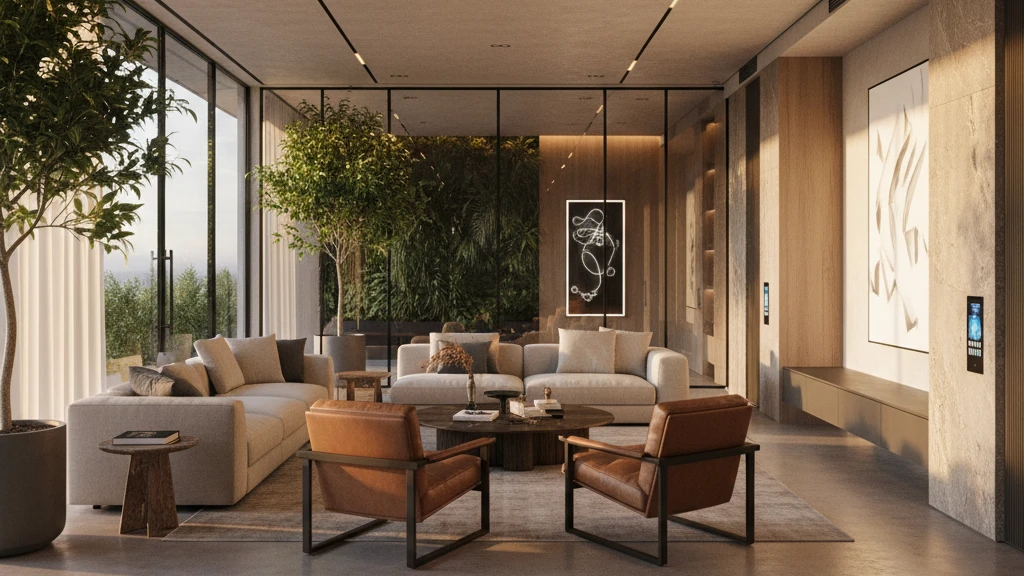
Understanding the Shift in Interior Design Philosophy
Modern lifestyles necessitate flexibility, emotional resonance, and spatial intelligence. Interior design is no longer about fixed layouts it’s about anticipating change and embedding adaptability.
• Emphasis on occupant behavior analytics and spatial zoning.
• Rise of multi-functional zones and convertible layouts.
• Strategic incorporation of wellness-centric systems, acoustics performance engineering, and biophilic design.
• Scenario-based occupancy simulation in residential and commercial spaces.
• Role of an Architecture and Interior Design Company in lifestyle-centric planning.
Strategic Interior Design Planning Services
Spatial strategy formulation is no longer linear it’s iterative, data-informed, and site-responsive and program-specific. Interior design planning now involves technical foresight and operational precision.
• Use of occupancy analytics and space utilization data.
• Scenario-based layout planning for hybrid work and living.
• Material specification based on lifecycle and sustainability.
• Collaboration with disciplines for integrated outcomes.
• Significance of Interior Design Planning Services in ensuring the space is future-proof.


Lighting and HVAC: Engineering Comfort and Efficiency
Environmental systems are key elements of the user experience. Nowadays, lighting and HVAC design include health, productivity, and energy performance altogether.
• Circadian lighting practices for residential and workplace well-being.
• Zoned HVAC units for temperature control with low energy consumption.
• Role of Lighting and HVAC Design Services in responsive interiors.
Architectural Services: The Structural Backbone of Interior Evolution
Behind every responsive interior lies a rigorous architectural strategy. Spatial flexibility and regulatory alignment are key to enduring design relevance.
• Load-bearing structures that allow future ability to be changed.
• Integration of MEP systems with interior design intent.
• Retrofitting legacy structures for modern use.
• Code compliance and accessibility as part of the design process.
• Contribution of architectural services to spatial longevity.
Smart Systems and Digital Integration in Interiors
Technology is no longer a feature to be added, it is embedded within the spatial framework of interior environments. Smart systems define ease of use, enable performance enhancement, and optimize configurability for the end user.
Key features include:
• Automated systems: Control of lighting, heating and cooling on the basis of occupation and environmental response.
• Building management system (BMS): Software used to regulate, monitor and control building services such as heating, ventilation, and air-conditioning systems for overall effective building performance.
• Smart home integration: Frictionless system orchestration with automated infrastructure for improved convenience and energy management.
Material Intelligence and Sustainable Detailing
Material selection now includes lifecycle assessments, environmental impacts, and performance considerations. The interior must be sustainable yet remain aesthetically refined and material-resilient.
• Application of low-emission surface treatments and recycled composites.
• Thermal-acoustic efficiency of surface materials.
• Modular detail for maintenance and upgrades.
User-Centric Design and Spatial Psychology
Designing environments around experiential authenticity means designing for behavioral dynamics. Interiors must support physiological resilience, cognitive clarity, and interpersonal engagement.
• Spatial sequencing to reduce stress and improve flow.
• Use of chromatic strategy and tactile materials.
• Privacy gradients in open-plan environments.
• Design for neurodiversity and sensory comfort.
• Empathetic design as a foundation for spatial relevance.
Designheed’s Approach to Real-Life Interior Solutions
Designheed operates at the confluence of engineering rigor and human-centric design intelligence. Their multidisciplinary expertise enables them to craft interiors that adapt to occupant dynamics beyond prescriptive design delivery.
• Architecture and interiors practice provides comprehensive space-making solutions for residential, institutional and commercial purposes.
• Advanced interior design planning services laying down spatial programming, materials curation and lifecycle forecasting.
• Lighting and HVAC design services with a focus on energy modeling, daylight simulation, climate sensitive layout.
• End-to-end design full-spectrum architectural services from BIM-driven design development, through structural optimization, to regulatory compliance.
• Leveraging BIM for accuracy during design, interdisciplinary coordination and long-term spatial expansion.
• History of successfully delivering scalable, high-quality user experiences in India and other global markets.
• An iterative design team working with the client – design dreaming, technical feasibility and long-term operator functionality in cities of the future.
Conclusion: Designing for Real Life Is Designing for Change
Interior architecture has to be thought of so that it can grow and change. As everything changes, we need our environments to evolve in terms of technology, emotion and functionality. This is only possible through the cooperation of design intellect, natural systems and architectural vision.
At Designheed, we create spatial experiences that align with modern lifestyles, integrating spatial awareness, smart technologies and an architectural perspective. Our diverse team merges behavioral analysis, flexible setup and health-focused details to create environments that adapt to real-world interactions. By utilizing BIM accuracy, engaging visualization and sustainable planning, we strive to craft interiors that are durable and future-ready, connected to emotional responses and consistently high-performing.